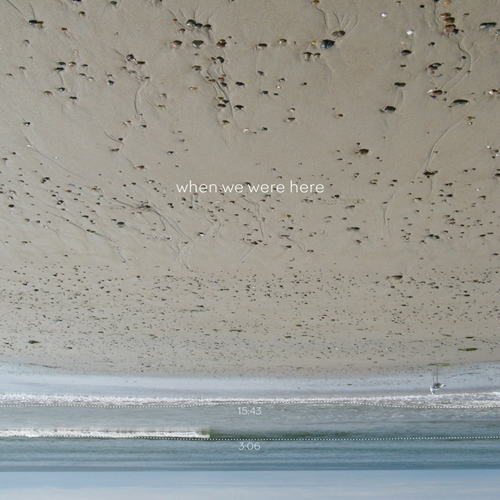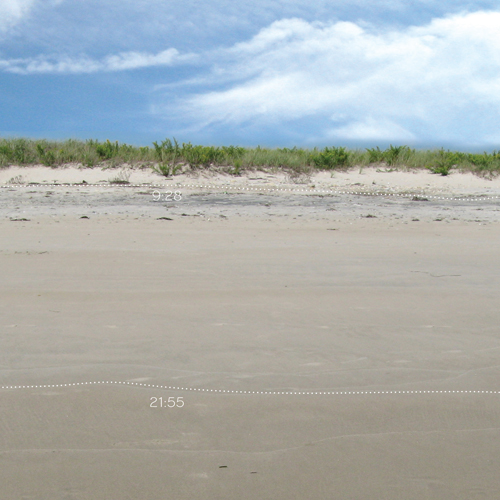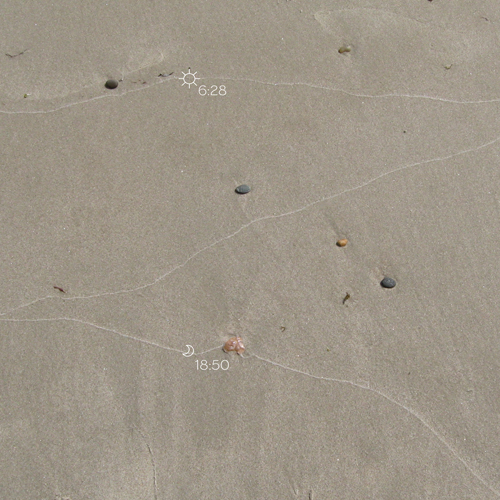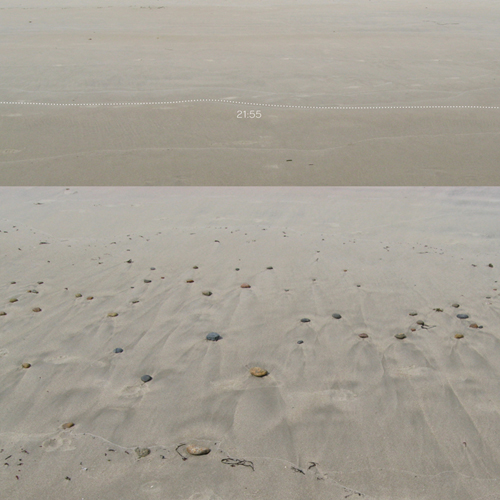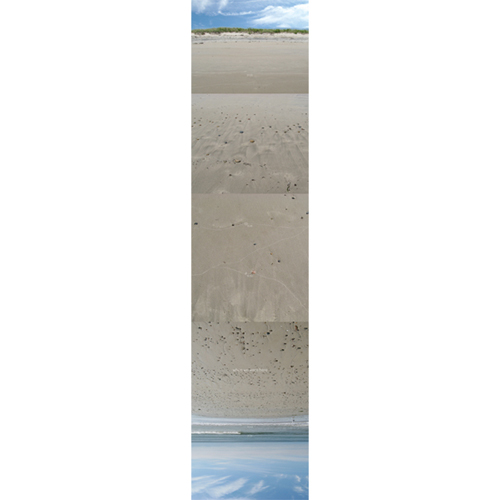



When We Were Here At the start of this school year, my thesis class took a field trip to Goosewing Beach in Little Compton, Rhode Island. I had just declared my intention to study time as my new thesis topic, so I was excited but anxious to see what I could do. Given my background and interest in information design, it is no surprise that I immediately thought of tide tables. So that September morning, armed with a stopwatch and a list of the high and low tides, I was ready to get to work. However, once I stepped onto the beach the experience of exploration became much more organic. My eyes were drawn to the salt lines on the sand. They crossed and meandered—each one a marker of a particular, past duration of the day. I made a conscious decision to remove my wristwatch from the experience altogether and enjoy the afternoon. Here on the beach, the minutes and hours blurred together, as my senses engaged with the environment, entranced by the sight, smell, and sound of the lolling waves. The result of this afternoon, my poster: When We Were Here, is a 24-hour timeline of Goosewing Beach. At Goosewing, the salt lines in the sand are evidence—a record of past moments since the last high tide—marking the earth in increments as the tides wane. By superimposing the tide table on a panoramic photo collage, this poster demonstrates the two time systems at play here—that of humans and that of nature. For the beach, time is manifested through the lines as a cycle of recording and erasing. For its visitors, the lines signal an opposing meaning: even in the midst of a seemingly timeless afternoon, they are a reminder that for us, time continues to move forward, leaving only traces of the past in its wake. |
 |